Sunday, August 20, 2006

Newfoundland Diary - Salvage & Lark Harbour


To spend ten days in a rented RV in Newfoundland can be either a voyage to the Ends of the World, a visit to Paradise or a descent into the Bowels of the Earth. You can take your pick. It's been all of these and several more to its visitors. To me, it was a sort of homecoming, a return to a northern paradise, even though it was my first visit. What do I mean? It's vistas, the rocky shores, the treeless barren interior places, the bogs surrounded by black spruce trees and the extraordinary hospitality of the people all reminded me of my second homes in the eastern Canadian Arctic and sub-Arctic. I felt instantly at home in a place I knew well yet had never been. It was very special to be there for so many reasons.

Our trip began in St John's, but we quickly headed south to Witless Bay and Lamanch park where we parked overnight. In the morning it was westward to Eastport to visit new friends made through a common interest in the voyage of Wendy Killoran this past summer. The very essence of hospitality, they showered us, fed us and made us feel their cabin was our home.
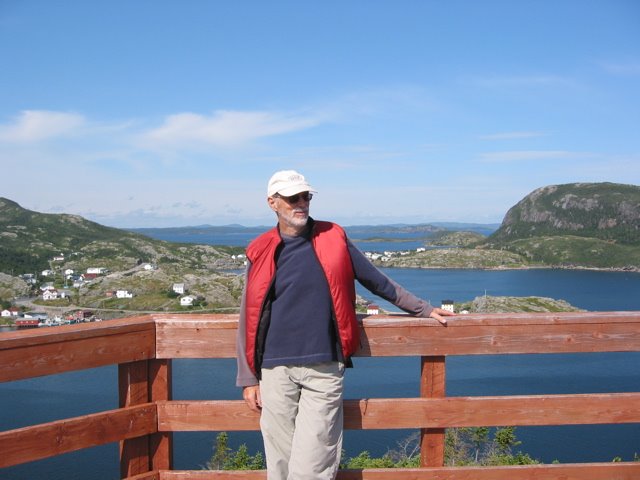

From there we went out to see Salvage, a nearby fishing town and photographic gem on the tip of the peninsula. What a place to paddle out of! Surrounded by bays, rocky cliffs and numerous islands and hiking trails, it would take months to explore the area by kayak and on foot. Winds were moderate, but growing the morning we were there, so we looked for a more protected spot to paddle in Newman Sound to the south. But here too, the seas were building and rather than risk a roll into freezing waters without adequate gear we put off paddling entirely and enjoyed hiking along the forested shorelines. Our friends had recently discovered a new hobby: collecting sea glass. These are bits of broken glass which the sea has slowly ground and chemically changed. People all over the world now collected and displayed these colourful exotica, made by man and shaped by the sea.


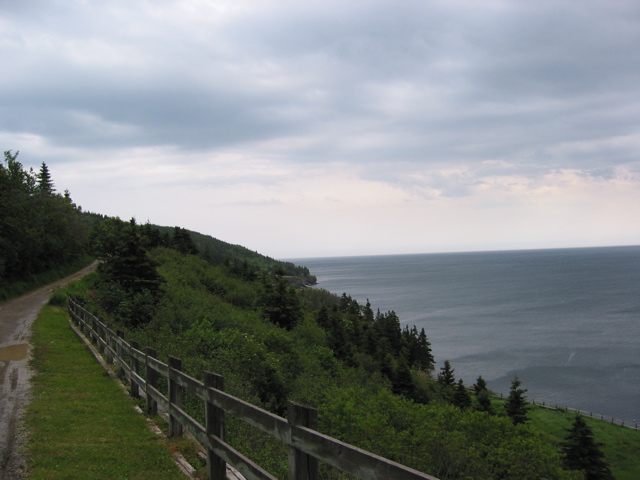
Our trip then moved to the west coast to visit other friends in Steady Brooke at the foot of Marble Mountain outside of Corner Brook. We drove in torrential rain most of the afternnoon, but the ever changing views kept us enthralled and the time passed quickly. The following morning, in spite the continuing rain, we drove out to the Bay of Islands where we had lunch at a park high in the hills overlooking the wind swept sea below. The clouds lay on the Blow Me Down mountains as we continued along the twisting road out to Lark Harbour, Bottle Cove and Little Harbour, all pretty fishing villages on the Gulf of St Lawrence.


We were intent on a hike, but the driving rain and winds dampened our enthusiasm. No paddling outfitters locate in the area and besides the heavy pounding surf outside the harbours had us thinking of anything but paddling. Instead we slowly made our way back up the Humber Arm past Corner Brook and we began making plans for visiting Gros Morne National park, a UNESCO World Heritage Site where the Earth's mantle is exposed for all to see and hike upon.

Monday, August 7, 2006

I'm Off to Newfoundland B'y!

That's right. I'm off to see the Rock for meself for a couple weeks or so. I'll post from there if I can. Hopefully I'll paddle the frigid seas and tickle some whale tummies and so on...

Sunday, August 6, 2006

A Compelling Campabello Beach


One of the interesting places I have been to this summer was Campabello Island which is a good stone's throw off of the easternmost tip of the state of Maine. The south end of the island is linked to Maine via a bridge. All other ways to and from the island require the use of a toll ferry boat. Property on the island once belonged to President Roosevelt who house can be toured by those inclined to that sort of thing. Odd, he felt the need to escape to Canada, but then again, maybe not so odd. Depends on your point of view, I guess.
This beach is located at one of these ferry crossings. There is no dock, no visible signs that a ferry even visits the beach except that the little road leading down to it mysteriously ends at the water's edge. When the ferry does arrive, it edges into the beach gravel and plunks down a metal ramp so that vehicles can offload and load. Very simple. Must be a hoot in the wintertime!
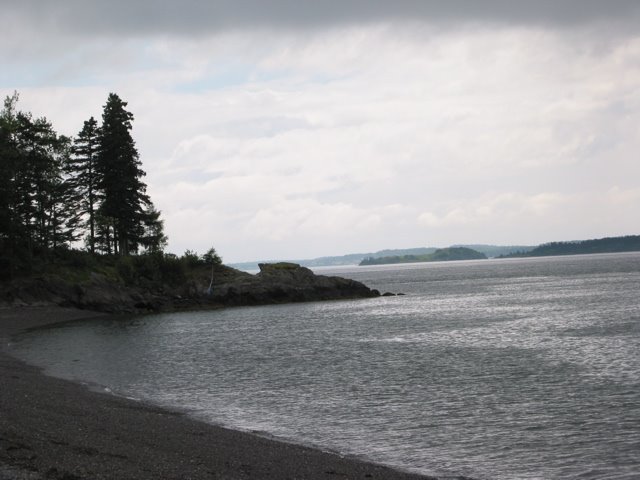
To the left of the dirt road lies this beach. Perhaps it was the light, the day, the company, I'm not sure, but I fell in love with this beach. I want it. Badly. Sadly, it's already owned and not backed up by much other than a smelling slough, still... It would be nice to have the beach. I might be able to do something about the slough, like turn it into a salt march or something...

The Local Band Concert

On another topic, my daily paddle took me into the local village for the weekly Sunday band concert. This tradition of music and popcorn by the lake has been going on since my childhood thanks to a wealthy benefactor many years back. Spread out on the lawn sit hundreds of people drawn by the site, the cheerful music and the adjacent lake. I was one of only two kayaks there today. Often there are several canoes as well, but today it was motor boats that predominated, perhaps due to the breezy conditions. I got to show the lady in the other kayak how to side scull with her paddle to keep her boat more or less in position. Such fun being a teacher again! The power of knowledge being transmitted to the uninitiated. I had to head home early and lie down until my testosterone levels returned to something below my personal 'Lantis" level...
Tuesday, August 1, 2006

Country Food


One summer the Inuit hunting camp I was living in ran out of sugar. As a result none of us ate any sugar or anything with sugar in it for a couple of months. It was unpleasant at first, but we managed to do without until finally we hardly missed having it. We lived happily on the food we were able to catch, 'country food' it was called back then.
At the end of the summer I returned to the village where my summer had begun. I went up to a friend's house and was offered a cup of tea. Naturally I reached for the sugar bowl, swirled a teaspoon of it into my tea and took a sip. Bang! My mouth went totally berserk! I could not believe how incredible that tea tasted. It was actually the taste of the sugar suddenly, after all that time, exploding in my mouth. It was a mind blowing experience and I've never forgotten the power of sugar from that day on.
So when I was checking to see how Renata Chlumska was getting along on the last leg of her journey around the USA, a comment she made caught my eye. She mentioned she was eating 6000 calories each day to power her trip, whether she paddled or bicycled. That struck me as a lot given she is not a large person, but I assume she knows what she's doing. Obviously anyone involved in a high energy activity, especially one that lasts for weeks or even months, must pay special attention to their diet. I'm sure she has this all worked out. To sustain oneself over the long haul, I would imagine that calorie consumption would be a critical factor.
According to one guide put out by the Heart and Strike Foundation of Canada, the "moderately active female" needs to consume up to 2100 calories per day, the equivalent male needs up to 3000 calories per day. So you can see why the figure of 6000 calories caught my attention!
I next got thinking about the average paddler like myself. I don't often paddle for days on end, but I have been out for a couple of weeks and more and my calorie consumption has not been high on my list of things to check into during preparations for the trip. Perhaps I should look at this again as there must be thing I should know.
For example, there are some well known side effects which show up when one is living in a calorie deficit situation. The first obvious one would be weight loss. More worrying would be possible changes in one's mental attitude, which could seriously affect the outcome of a trip, especially over the long haul, where the effect probably creeps up on one slowly. I'm not certain what specifically these symptoms would be, but I suspect mood shifts, indecision and general lethargy to be in the mix somewhere. There may be other things as well.
All 'food for thought' as they say, so next time I head out for several weeks or more, I'm going to give my calorie intake more serious thought than I have done previously.

Friday, July 28, 2006

Fundy Fotos


Following the Fundy coastline as much as we could during my recent trip to Prince Edward Island, brought us to the interesting village of Alma. Fog prevented us from looking out on the bay, but seeing the fishing boats lying in the mud beside the wharves gave us an idea of how great the tidal range is in this area. Kayak campers, beware where you tent! You might find yourself adrift in the night. We were also surprised to come across a vineyard on this foggy coast. Mmmmm.... foggy wine?

The next day, closer to Moncton, New Brunswick, we took a look at famous Hopewell Rocks while the Fundy tide was out. Descending several sets of stairs down the cliffs, one can walk around the sea floor admiring the stacks and tunnels below the cliffs. Imagine being trapped down there by the tide as it rushes in!

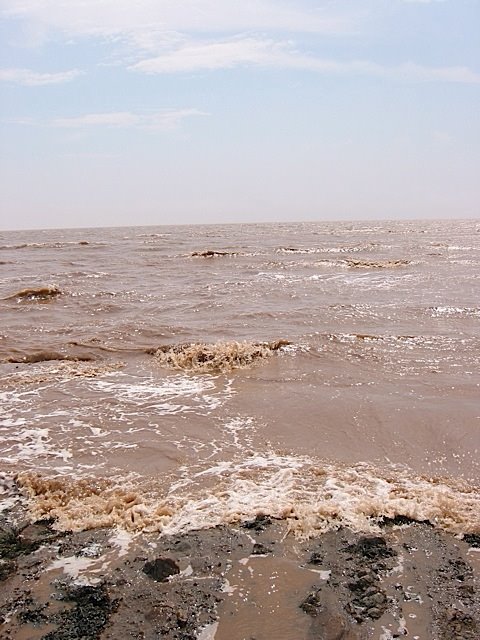
I kept taking pictures of the reddish-brown coloured coloured water as the waves rode up the rocky beach. I'd hate to land a boat in this area as the hazards are completely hidden in the oddly delicious looking water. Needless to say, I had to have chocolate milk with my lunch! I can't imagine where that idea came from...

Wednesday, July 26, 2006

Newfoundland, Accordions and Me


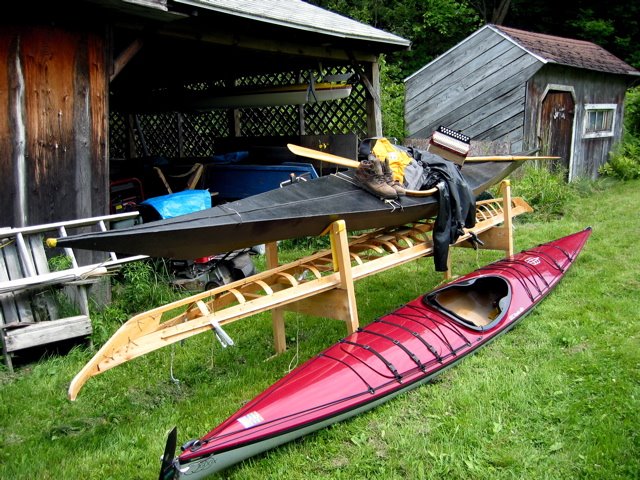
I feel I should be practicing my button accordion playing if I'm headed to Newfoundland in August. I've got all my boats and other gear together as you can see in the photo above. I suppose I should get the cover put on my 'cheater' frame, but it's got some problems and I continue to procrastinate rather than solve them. The accordion story is interesting however, so I'll tell it first.
Years ago, after a hard few days chasing some walrus with some Inuit in Northern Foxe Basin, wet, tired and bedraggled, I found myself in a cabin on a gravel beach in the small town of Sanirayaq, Nunavut. The house belonged to some relatives of the guys I was out hunting with, so even though the place was vacant at the time, we moved in and made ourselves at home. Due to lousy weather and the need for my friends to do a little socializing, we stayed for several days, long enough for me to start getting bored with village life. The only entertainment I found was several reel-to-reel tapes of Harry Hibbs playing Newfoundland style accordion. I thought the sound was awesome and nearly drove the others crazy playing the tapes endlessly. There was something about that style of accordion music that hit home to me.
A few years later I was teaching in Kuujjuaq, Quebec, and went for a walk to the post office with a fellow teacher. He was desperate to get some new boots he'd ordered via a catalogue store in the south. Sure enough, a large boot-sized parcel was in his mail slot. He happily collected it and we headed back to his place to try them on and have a bit of tea after working so hard all day - we were teachers, after all!
Opening the parcel, he discovered the boots had somehow been switched, no doubt by mistake, for a button accordion. Checking the catalogue numbers and the bill showed the store had somehow managed to mix his order, so that his $30 boots had now become a $200 accordion! Furious with the mix-up, he was all set to return to the post office and fire off a nasty letter demanding the store smarten up and send his boots special delivery on the next plane out of Montreal. Winter was upon us and his feet were getting colder by the day.
Recalling my fondness for Harry Hibbs' music, I suddenly realized this was my chance to buy an accordion for $30, save him the trouble of returning it and become an accomplished musician all in a single blow! The deal was struck.
During the next few days, I enlisted the help of several Inuit friends, who could play, to teach me a few tunes and I can still play them. The tunes are fast paced pieces, good for dancing in the style popular back then in the small northern Quebec Inuit coastal villages. Mind you, they are the only tunes I know on the accordion, but having been brought up the Labrador coast by Newfoundlanders during the days of the fur traders, they'll be perfect for my trip in August!
Now, 30 years later, I still don't even know the names of any of the tunes, but I have played them for years to my classrooms of children, who, of course, thought I was Harry Hibbs, reincarnated. Maybe they'll think so on the Rock as well. Or maybe I will be taken out in the bay to be submerged quietly in the dark, cold waters, while the fog drifts about hiding the dirty deed from onlookers. That's why I'm going to take along my Reed suit to wear while I'm playing, just in case I need to swim back to shore after I untie the rocks attached to my feet...

Monday, July 24, 2006

The Reford Gardens of Grand Metis


Returning from my trip to Prince Edward Island, I went to visit the Reford Gardens in Grand Métis, Québec. These famous gardens were created by Elsie Reford when illness forced her to give up the horseback riding and hunting trips she went on with her husband when vacationing at her Métis home. With the help of her gardener, she began by transforming the banks of a little stream which passed beside the house into a rock garden and from there her work spread out to the lawns and orchard areas beside the house. Today the gardens are as she left them, a magnificent sight to behold, a delight to walk among, a calm place amidst the storms of life. Here are a few quotes from the garden's web site explaining the background of the gardens:


"Situated at the confluence of the Metis and the St. Lawrence rivers, The Reford Gardens/Les Jardins de Métis sit high above the water’s edge. Elsie Reford created these gardens at Estevan, the property she had been given by her uncle, George Stephen. In the 1920’s she began transforming her property into a garden. Gardening became the passion that ruled her life. Over more than thirty years she designed and developed a garden that is renowned for its imagination, its unique botanical collection and the careful integration of plants in a naturalistic setting.

"In 1918 her uncle, Lord Mount Stephen, gave her his house and property at Grand Metis, Estevan Lodge and the Metis River. She had come to Metis regularly as a young woman and from 1904 had regular use of the property. There she learned to fish, ride, hunt and canoe. In 1909 she rode from Gaspé to Grand Metis and several years later rode around the Gaspe peninsula with her two sons. After being given the property she added substantially to it, acquiring adjacent farms and properties. In 1926 she enlarged Estevan Lodge, adding a second story, quarters for domestic staff and several outbuildings. That same year, she began gardening. Over more than thirty years, she designed and built the gardens, expanding them substantially every year. She spent her last summer at Grand-Metis in 1959. She died at her Drummond Street home on 8 November 1967 in her ninety-sixth year.

"The gardens are also the result of a unique collaboration. Elsie was the gardener and her husband, Robert Wilson Reford, the photographer. He took photographs of the gardens over a period of almost fifty years. In the darkrooms he built for himself in Estevan Lodge and his Montreal home, he developed pictures of the landscape, the flowers, and the family and friends who visited Grand Metis. No other garden in North America is blessed with such a complete pictorial record."


We arrived at the gardens with only an hour or so to go before closing, and the place was almost empty, most visitors having left for the day. We were able to stroll about like we owned the place. And what a place to own! The profusion of flowering plants and pathways are almost magical. If you've never been in a classic English garden, then this place is surely a Mecca, a place you must visit at least once in your lifetime. For kayaking buffs, the river passes by just below the cliffs and presents ample challenges regardless of your skill level.

Saturday, July 22, 2006

PEI's North Cape

I'd hope to paddle around Prince Edward Island's three 'corners' on my recent trip, North Cape, East and West Points, but generator problems on one of the cars meant I wasn't as free to travel around as I'd hoped. Taking some advice from Outside Expeditions as to which cape might prove to be the most interesting paddle, I headed to North Cape on the northwest tip of the island.


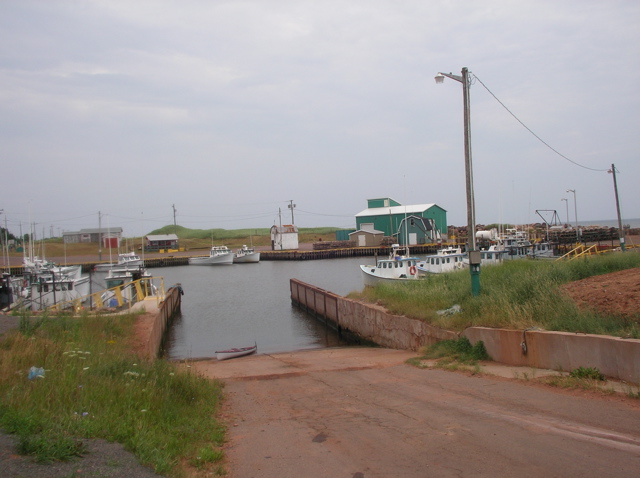
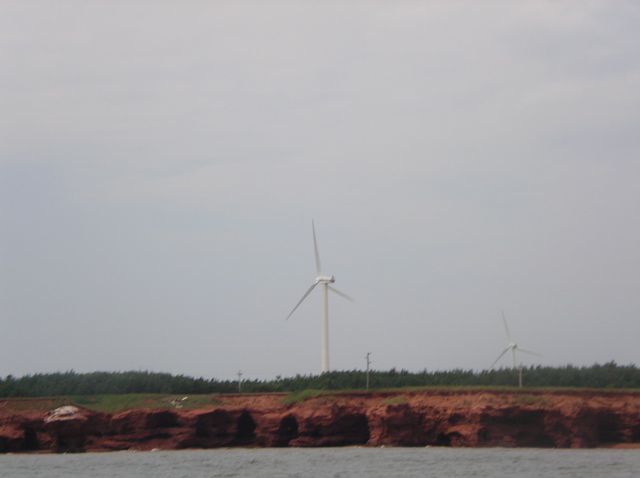
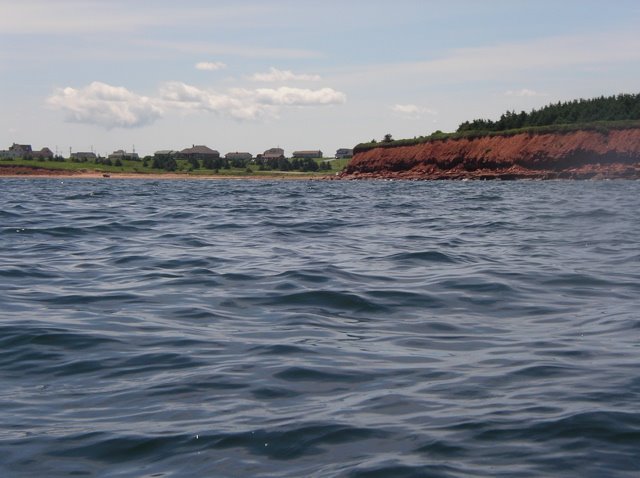
I put in at Seacow Pond, the closest spot to the Cape with easy access to the water. It's a commercial fishing harbour with a steel walled entrance to the ocean. With an east wind blowing it was a bit tricky exiting without banging into the walls. Once outside, I had to really dig in for a few hundred yards until I found deeper water and easier waves with less reflection off the harbour walls. Once there I turned westward to the Cape. The cliffs here are moderately high, perhaps 30 to 40 feet off the water, a deep red with highly convoluted sculpturing from years of wave action. I made good progress westward along the shore with a healthy swell coming in under my stern and a quartering breeze on the starboard side.


I began to notice the windmill farm built to catch the winds on the cape as well as the Interpretation Center building as I got closer. I understand the windmills generate electricity to produce hydrogen through electrolysis. Seems like an odd arrangement, but then again, hydrogen is a good, clean source of energy when it's burned as fuel. It still seems odd, however.


The closer I got to the point, the bouncier the seas became, perhaps due to the water getting more shallow or the action of currents swinging in the the west. Paddling in an empty boat only increases the action when it's wavy and I found it difficult to operate the boat, paddle and camera simultaneously! I continued on determined to round the Cape and at least have a look at the western shore, regardless of the growing waves and confused seas I was encountering. Finally, the cliffs broke into a few stacks and I could see the red cliff walls heading southward. I had passed the Cape!

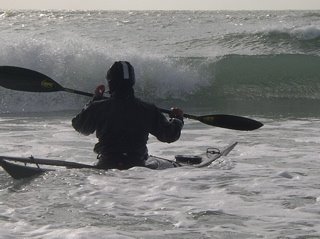
With the breeze now rapidly becoming much stronger, and breaking waves appearing on both sides of me, even some distance out from the shore, I decided it was time to head back. Fortunately, I find the QCC an easy boat to bring into a turn even in rough water, so I quickly swung around and faced the waves I'd been surfing down only moments earlier. I actually like paddling into large waves and this was no exception. I like easing my way up the slope and then digging into the crest just as the bow goes over the top. Then I pull hard for a few strokes down the wave back and repeat the process, letting the boat and the wave bring me up to the next crest. My only concern was I seemed to be angling inshore and was obliged now and then to head out parallel to the waves, which is a lot less fun than charging into the waves straight on.
A couple of hours later I surfed in on a wave slipping neatly between the outer harbour walls, made the 45° turn and slid into the calm waters inside. A fun paddle!


Once the boat was back on the car, I drove up to the Interpretation Center to have a look at where I'd been. I was surprised to see the line of surf extending a long distance out. I had seen some of it from the water, but had not realised how extensive it had become in the now much stronger wind. Perhaps the tidal currents were having more of an effect as well since I'd been out there.
I drove back to Cavendish, where I was staying, keeping the coast in sight when I could. The more of the coast I saw, the more it beckons me to return to paddle it's full length. I stopped and met Anne Murray at her kayak rental site on Malpeque Bay and we chatted in the wind for some time about people we knew who'd paddled around the island in years past. We could have spent the rest of the day telling stories, but she had to leave to pickup a group out paddling before the winds pushed them completely out to sea.

Friday, July 21, 2006

Oh, to Paddle Prince Edward Island!

My brother and a long-time friend are British vintage car buffs. For several years they have dreamt of attending the annual British Car Show held on Prince Edward Island (PEI), and this year, both having fairly reliable cars, they decided it was time to make the long trek to the Maritimes. By brother drove his 1960's Austin Healey Sprite, now restored from it's days as a race car 35 years ago when he first acquired it.


His friend, Bruce Fowler's car was a Morris Minor 1000, again the result of a caring restoration job over several years.


I took my trusty Toyota Matrix and my QCC 600. My job was to act as back-up vehicle, beer wagon, parts depot and so on. I was also expected to provide doses of general 'bon vivant' type humour should the occasion require it.

Our route took us through the mountains of northern Maine, down to route 1 along the coast and from there into New Brunswick. We made a short stop at the Canadian home of US President F.D. Roosevelt on Campobello island, then crossed over to Deer Island and finally to the mainland. On the Deer Island ferry, the operators got excited about the old cars and invited us up to the wheelhouse to chat. The tidal action was very interesting to see from that level, the change in water levels and currents being very evident in the narrower channels. Seeing how the ferry was run was also very informative as the pilot could manipulate the dual controls which ran the fore and aft propellors, both of which were able to swing in a 360° arc independently of each other.


We arrived in PEI in time for the Show's opening dinner held outdoors on a magnificent property, surrounded by an amazing variety of English cars dating from a 1926 Bentley to a brand new Lotus mid-engined beauty in brilliant orange paint. We were quickly made aware of the famous island hospitality and friendliness, not to mention the fabulous food, much of it fresh from the sea.


The show itself began the following day in gorgeous sunshine on a gently sloping field overlooking one of the many inlets from the Gulf of St Lawrence. I took off to the harbour at North Rustico for an afternoon of paddling.


I was interested to discover that people there remembered Wendy Killoran's quick visit the previous year during her paddle around the island. I also spoke to some folks at the Outside Expeditions shop located right on the water, thinking they would be a good place to return to some day for help in planning a longer paddling trip should the occasion arise. Again, friendly island hospitality was everywhere.


I headed out through the channel, passing some surf breaking on the shallows at the entrance, then paddled out into the Gulf and made my way westwards to have a look at the red cliffs I could see in the distance.


The water was a comfy mix of swell and wind-driven waves. I paddled up wind, and down swell so had to keep my wits about me as every now and then a steeper than usual blob of water came my way in an attempt to see me flailing through a bracing maneuver. I paddled along the coast, admiring the deep red cliff formations, caves and period houses perched above them until I was nearly within sight of Cavendish, home to 'Anne of Green Gables'. Only a few other kayaks were out. I had assumed there would be plenty of company, but not so. I had the ocean nearly to myself! Only a single and a double were seen that afternoon.


Another terrific meal was provided that evening, again outdoors, under a large tent. My brother discovered he'd won a prize for the best Sprite in the show.

Tuesday, July 11, 2006

PEI Cape Crusader

I'm heading to Prince Edward Island tomorrow for a few days, escorting my brother down to an antique car show. While he's showing his car - an Austin Healey 'bug-eye' Sprite, I'll paddle the three capes (or points) of PEI. In other words, I do the tough parts and skip over the long boring coastlines... LOL At least I won't be 'playing' golf!

I'll be back next week sometime with some pics, etc.

Saturday, July 8, 2006

Managing the Past


There was an 'assisted suicide' in a town nearby the other day: a man over-drugged his ailing wife who had begged him to end her pain. It's got me thinking of my friends who lost their son to suicide last Spring. They are slowly putting their lives back together, although obviously, one's life never returns to what it was. How could it? There will always be that hole in their hearts, the unanswered questions, the empty chair, the missing smile. Still, life seems to keep moving, they go through the motions and as time goes by their memory of him seems to change and heal. It's almost as if he has gone away somewhere and won't be back for a while.
I guess we all live with memories of the past, things we want to have back, things we wish we could change if we had the chance. And sometimes that chance does come, even for those involved in assisted suicide.
When I lived in the arctic I made an extended trip by canoe to Baffin Island to hunt caribou. It was in the season when their fur was the right length for making clothes, the period just after the spring molt and before the hair grew to its longer winter length. Along the way we stopped at an island where there were ancient Thule Culture subterranean houses and I was anxious to see them. These people had had boats and hunted whales, and were the fore-runners of today's Inuit culture. On arrival I was surprised to discover camped on the beach an older man and his young wife and family. It was confusing to meet them. I thought I knew everyone in the area, yet only the man's young wife and her children were familiar to me. I had stayed overnight once with her and her young children about a year earlier. Her kids had taken me out egg collecting in the fog the following day and astounded me with their visual acuity. Why had no one ever mentioned the older man and his grown-up sons? Where had they been when I'd visited their camp the year before?
Immediately I could see this man was a special person. He was 'inumariq', a 'real inuk' as people would say back then, because he lived in the 'old way' like people had done years ago. His sons, all in their late teens and early twenties ran to his beck and call. He sat on a white bearskin rug when steering his large freighter canoe, his tent was much larger than anything I'd seen in the area. Food was everywhere. His dogs were numerous and well fed, even in summer. This man was living big! But who was he? Why had I never met him?
In the weeks that followed our visit to his camp, I learned his story. Years previously, when most people lived in small hunting camps scattered far from each other and when everyone's survival depended on close mutual cooperation and support, a difficult situation arose. An elderly man, one of the leaders of the camp, realised he was sick and becoming a threat to the small group. He became afraid that he would go mad and do something to harm the others in the camp as his pain increased. Quietly he talked several of the other men in the camp to assist him. He got them to load a gun and place it in a way which would enable him to pull the trigger. They reluctantly agreed to help after initially saying no. They knew they had no choice.
For some time nothing was said, but eventually the story of the old man's death got out. The men who had assisted him were tried and the man I had met was found guilty. His sentence was a life-time banishment from the village. He was permitted to make a supply trip only once or twice a year. On one of those trips he had married the young lady I had met and this arrangement resulted in his having a family composed of grown up children from his deceased first wife and the young children who'd collected eggs with me.
To meet this group of people was to go back in time and see what life in a self-sufficient Inuit hunting camp must have been like years ago. It was tempting to think it was a better life, but that was also an illusion. His family, especially the younger ones, were being lost to the changing world and being left behind their peers in town. When they got to school age, the banishment was lifted, but the old man and his sons spent much of the year in their traditional camps whenever they could. He didn't care for the new memories and stayed in the old ones, living the way of his forefathers.
I'm sure my friends will revisit their past as well and think of the happier days when their son was young and full of life. I think they are learning as well to accept his decision to depart this world and his desire to seek something better in another. It's sometimes hard to accept what others do, but often there's little choice left to us. We just have to accommodate, accept and move on. Well, some of us, at least. Some can have it both ways like 'inumariq'.

Friday, July 7, 2006

So Where's Freya?


If you've been wondering what happened to Freya Hoffmeister after she finished paddling Newfoundland's south coast with Wendy Killoran way back in May, well, be sure she hasn't been laying about! I understand she's now in Sisimiut, Greenland participating in the National Greenland Qajaq Rolling Competition. These championships, held every summer, bring Greenlanders and international competitors together to try their skills at a variety of kayak rolling maneuvers, distance races (some of which include tough portages) and the famous rope gymnastics.
Most competitors build their own boats themselves, customizing them so they fit like a pair of stretch jeans and have only a few centimeters of freeboard behind the cockpit! You know, cheater boats. Well, almost, anyway, like I hope to finish building some day when the rain stops and my wrist feels better and I stop making up lame excuses...!
I'm not sure if Freya will be able to post from Greenland, but it's worth visiting her site at 'Freya Underground' (see right). The 'Greenland blog' site and 'Dubside's Communiqués' site, both listed in the column to the right as well, will also be posting content from Greenland during the competition. Check them all out!

Wednesday, July 5, 2006

Living the Private Life


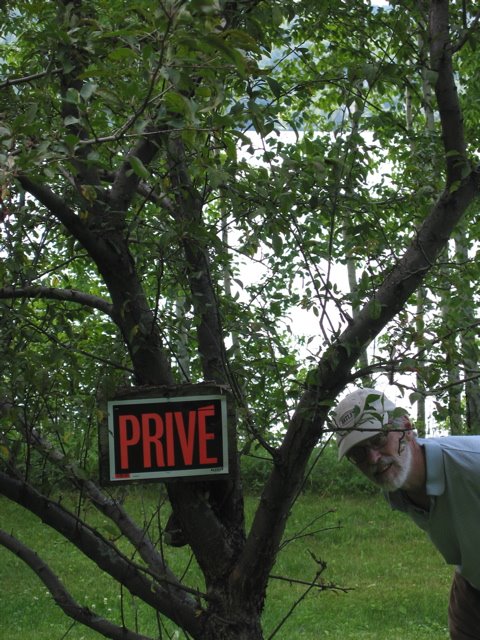
About a year ago I was astounded to notice for the first time that a new house had been built just above a nearby beach. It was a beach I often paddled along, but until that day I had never seen any signs of the house or its ongoing construction. Admittedly - and mercifully, as it was a monstrosity built in European French chateau style - it was somewhat hidden by trees which lined the beach, but still... What caught my eye in the first place was not the house itself, but some new signs posted at the waters edge. These signs had been tacked onto trees as though fixing them on proper posts would be adding insult to the additional expense of catering to strangers who should already know their place and not need to be told to push off. It was bad enough that these lowly dregs of society had been taught to read, let alone allowed to roam freely upon the planet's sacred waters in their ridiculously tiny hand propelled boats.
The signs made it very clear: people like me were to KEEP OUT!


Now I'm not one to insist on camping or otherwise using the front lawns and bushes belonging to people I don't know, but I don't need to be told to 'Keep Out' either. Like most people, I land on private beaches only when in dire straits and I do so with a 'Leave No Trace' philosophy. Otherwise I paddle past, but it irks me that a growing number of property owners feel the need to be so protective and possessive of their land. What are they expecting? That we launch massive invasions, hold noisy rock fests, trash everything they own and then slip away into the darkness of the night knowing we've just staged another French Revolution and beheaded yet another monarch?


There is one interesting thing about the signs however, and that is their variety and how they withstand the passing of time. Some well-to-do owners have managed to go beyond the crass store bought stuff and fabricated beautiful gates and rock walled entrances. Other signs have aged remarkable well and produced naturalized art objects of themselves in spite of their owners' intentions. To me this speaks loudly and profoundly. It's clear that nature doesn't like the signs either and slowly re-creates them into something of it's own, quietly erasing and sometimes even changing both their message and the medium they're written on. I like nature, a lot! Sort of an invasion from within...

Ouch!


I went hiking on Monday along a favourite trail our family has done usually at least once a year since our children were toddlers. So it's a trail I know really well. This year, thanks to our new 'monsoon' weather, the trail was a slick as a greased pig and I got victimized! Coming down, I hit a spot of Bucky-ball mud and managed to badly sprain my left wrist on impact. No paddling for me for a few days... Boo-hoo. Oh well, there's always - and I mean always - the internet!

For example, why not try visiting the Greenland Qajaq blog from Sisimiut, home of Maligiaq Padilla, where this year's National Championships are being held? Should be fun for all!

Sunday, July 2, 2006

Wendy and the Newfoundlanders

I understand that something like 1200 and more hits a week are being recorded on Wendy Killoran's 'Round the Rock' blog site as she tells us the story of her remarkable 'voyage of a lifetime' around the island of Newfoundland. Not only is this a very high number, but that she has achieved such a large following so rapidly speaks both to the high quality of her writing and photography as well as to her ability to provide such fascinating content. I believe it has set a new benchmark standard for expeditions to meet. Everyone who launches from now on will be judged on how well they kept their fans informed of their progress and on the nature of the places they visit along the way. Everyone will be asking, did they tell their story as well as Wendy told hers when she paddled around Newfoundland?

Obviously it has attracted many loyal fans who return again and again to see how she is progressing. I am no judge, but it seems to me that this may be the first time so many people have been been able to play such an intimately connected part of a major paddling adventure. The fact that Wendy has been able to post both updates and pictures almost daily has provided viewers with a real sense of 'being there' on the journey. Not only have we read her story, but also we've been given the opportunity to add our own comments back to her. At times, she has managed to respond directly to her fans, opening a dialogue between fan and paddler. After a long day on the water, to go this added distance just for her fans is no easy feat! An added bonus too has been the input from islanders who have hosted or met Wendy. This has proved yet another part to the tapestry being woven on this superb blog. What a wonderful sense of being connected to her adventure!

I have no idea what Wendy's reaction has been to being in such public view. She strikes me as a quiet and somewhat private person for the most part who has bravely and suddenly thrust herself upon the world's stage for all of us to see. Certainly she appears to enjoy our close attention and behaves like the real pro she obviously is! Hopefully she sees us as being there to encourage her onwards through the salt laden winds and waves she faces almost daily. Perhaps we also provide a connection for her back to our world, where people don't paddle for months on end, camp on windy beaches and have cold, salt spray splashed on their faces on a daily basis, hour after hour!

The other aspect of the blog which Wendy has brought to us viewers time after time, is how wonderfully hospitable the many Newfoundlanders she has met are as a people. Imagine for a moment some stranger pulling into your driveway, tired, wet and slightly disheveled. Would you rush out and offer them tea, dinner and a shower? Would you insist they stay the night? I doubt many of us would have the nerve to go that far, but that's what Newfoundlanders have been doing for paddlers for years. It's part of who they are. They are obviously a special people, much like the Inuit who did the same for me when I paddled their country. It's a way of life most of us have lost long ago and no longer remember. Today our properties are plastered over with 'Keep out' and 'Private' signs. 'Beware of the dog' signs are about as friendly as we get!

So my hat goes off to you Wendy and your Newfoundland hosts. You are all remarkable people. Thank you for openly sharing your world with the rest of us. We've learned so much! And to Wendy who still has a few miles to go, the Best of Luck and safe paddling! We're all behind you every stroke of the way!

Tripping the Gaspe - Part 6 of 6!


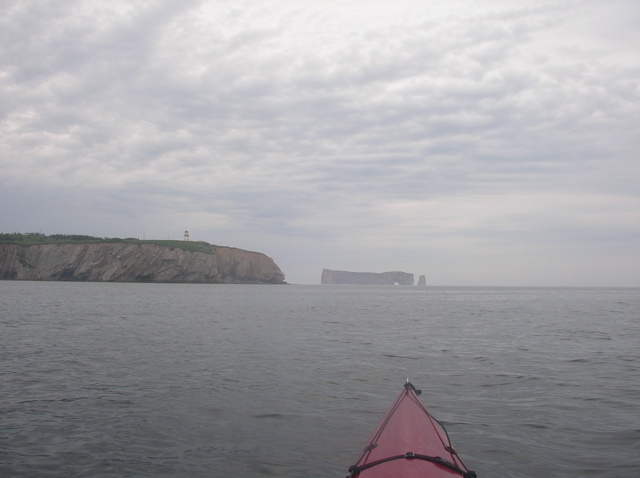
I was back in L'Anse à Beaufils and on the water by 8:30 am, heading northwards towards Percé. The day had a rainy feel to it with low hovering clouds and undulating mists. The low wind and the tide were both in my favour so it only took me a little over an hour before I found myself off Cap Blanc and in sight of Percé. Along the way I had threaded my way through a field of fishing pots and boats doing their usual early morning chores. Some people had waved and seemed interested in my solitary journey. I was something different paddling through a life of sameness, I suppose.
Bonaventure Island beckoned off to my right hand side and I bowed to it's charms. Leaving the fishing pots, I headed across the 5 km or so of open water and was soon gazing up at the reddish coloured rocky shores. Suddenly to my adventurous mind the island became something much greater in my imagination! Here was an island with rock bound shores, numerous old and abandoned homes, a potentially tumultuous seacoast, few landing spots and, as I was soon to discover, it's very own gannet colony!
It was an miniature adventure island for the kayaker who lacked the months of time and the sheer guts and strength, both physical and mental, to do the real thing! Within a few hours or less, one could circumnavigate and pretend one had obtained a small taste of the same thrill and wonder that going around a real and far away exotic place would provide many times over. I paddled with renewed vigor and excitement!
I started to experience some of the fear that rocky coastlines stir up in the hearts of small boaters. The ocean swell began to grow and the winds picked up, although they provided nothing like the feelings of dread I had at Cap Gaspé. Here I was well within my comfort range. Seals were abundant and curious, graciously getting off their rocky thrones to venture over to see me close up as I went by. I passed the only landing spot on the whole island other than the larger commercial dock on the island side facing Percé. It was a tiny strand of sand, tucked away behind some outer reefs, the single place which could afford safety in a storm. The guy at the kayak outfitter had told me the owners of the beach didn't allow landings however... Somehow this didn't mix very easily into my adventure fantasy where hospitality would be freely offered to seafaring folk.


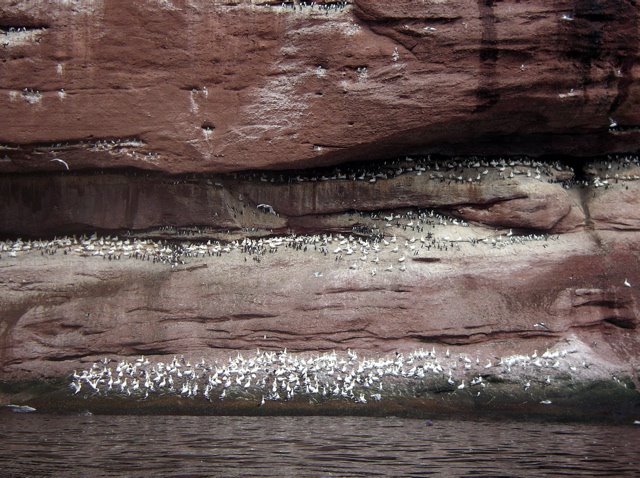
Finally as the cliff face beside me rose to a crescendo it became frosted over with a layer of white birds. Thousands more birds of several species: gannets, mures, guillemots and gulls were swirling through the air. There were birds to the left, to the right, in front and behind and all of them screeching their hearts out! What a sight! More birds floated in the water, some in groups and by themselves, ready to dive or flap away in horror at my approach. I was stunned by the sights and sounds which surrounded me.


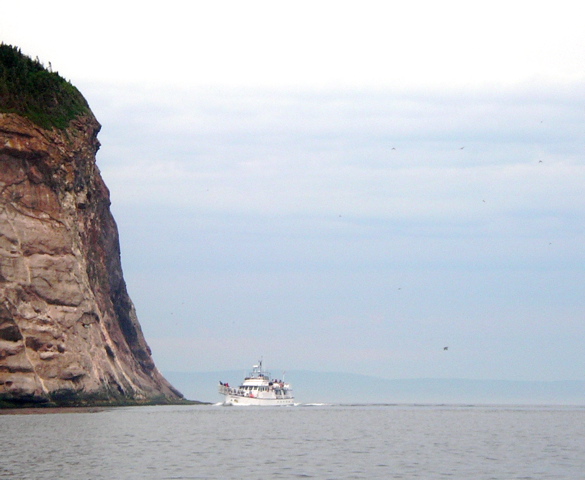
I paddled in slowly, taking pictures and a short movie in a ridiculous attempt to capture the impossible. I went right up as close to the cliffs as I dared to get a feel for life in a smelly bird colony. I paddled out to be the distant observer. Either way it was overwhelmingly busy and busting with action and excitment. I suppose after half an hour or so I reluctantly paddled on and continued around the island, passing a few tour boats in the process.


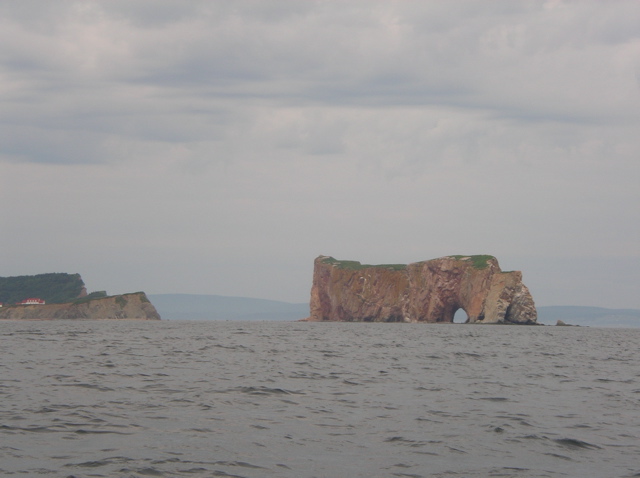
Once again Percé Rock and then the village itself appeared as my circumnavigation came to an end, but then so did the calm winds. As I entered Percé harbour, the winds steadily stiffened from the north. I turned the boat to get one last look at the hole in the rock before heading back down the coast. It was hiding in the mists and waves, slowly disappearing as my trip neared its conclusion.


Unlike it did heading out, the wind has risen and began working in my favour, pushing me back to my launch site over the next hour or so. As I passed through the fields of fishing pots, I could see them bending to the current. The tide had reversed and was pulling me home as well. At 12.30 pm I passed through the light surf and pulled my boat above the foam. A family watched me carry my stuff up the beach to the car as they were eating their lunch. To their minds, I must have appeared from nowhere! I headed back to my campsite to see what the chef's lunch special was going to be that day. It turned out to be some yummies remaining from a trip I'd nearly taken last summer down Quebec's Lower North Shore. That trip had suddenly ended just as it was beginning - but that's a whole other story! Oh well... the meal tasted as good today as it would have then. Just the dinner companions had been changed!

Saturday, July 1, 2006

Tripping the Gaspe - Part 5


Ideally I should have found a way to park the car so I could paddle the coastline from Cape Gaspé to Percé. It isn't that far and the coastline has merit for the adventurer paddler. Alas the logistical problems such arrangements entail baffle me so I took the simpler route and drove. Doing so took me around the corner and into the hills behind the town of Percé.


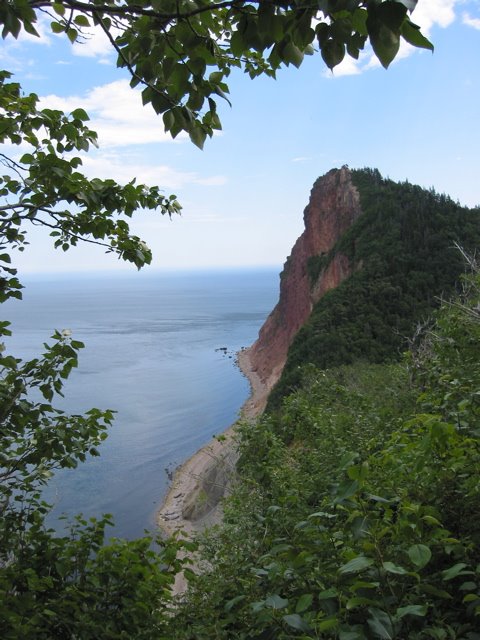
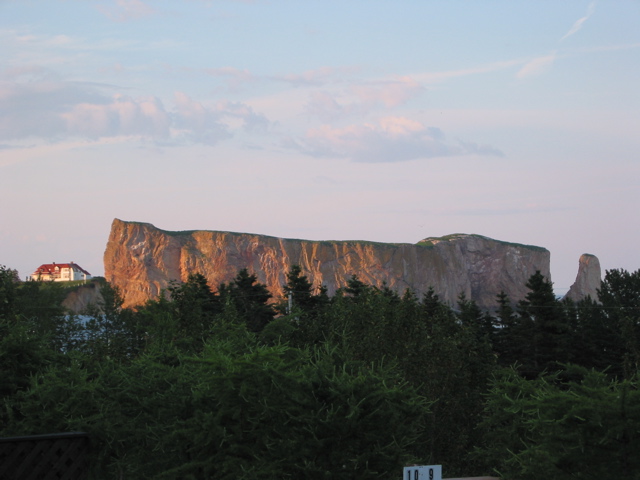
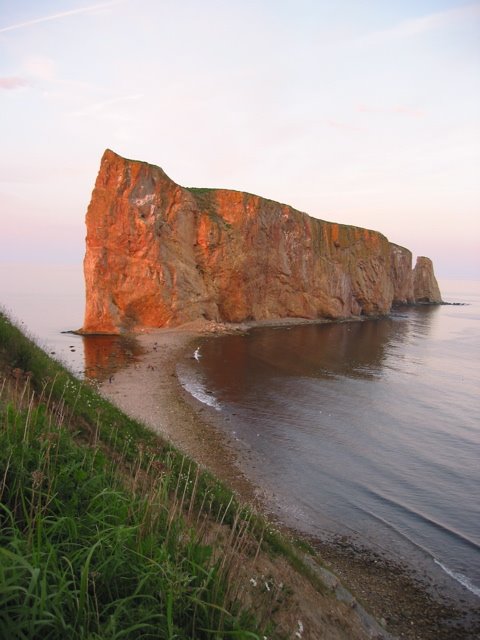
There is a scenic overlook just before the final plunge into the town which has a dramatic view of the cliff formations seen in this area. The next vista is looking down on the famous ship-like pierced rock itself: Le Rocher Percé. I headed down the hill and into the village. Before long, I'd found a camp site within easy walking of the main area of town and went looking for a suitable launching site.


The local kayak rental outfit in town launched their boats over the concrete sea wall onto the beach about 4 meters down via a half finished wooden ramp. They were full of informative advice and very willing help me, but I like to do things my way, as usual. The owner of the camp ground suggested trying the next little town along the coast called L'Anse à Beaufils where an artifical harbour and beach existed. I drove the 9 km and checked it out. It was my kind of place, quiet with parking near the water's edge, with an easy carry to the water's edge.
Returning to Percé, I played the tourist visiting the shops selling all sorts of stuff that tourists seem to want. I wandered out on the pier and inspected the whale watching boats and a very heavy duty, built-to-take-anything rescue launch owned by the Coast Guard. Discovering a place with internet access, I sent off a few notes to friends and family and checked into how the other kayak adventurers were doing: Wendy had finally managed to get off her beach in Lumsden before the town forced her to pay taxes incurred during her long stay, and Rotem had zipped through Iceland's west-fjord country and was barreling down the north coast.


In the evening I again played tourist and caught a few pictures of the Rock in the fading light.


Tomorrow, I paddle!

Friday, June 30, 2006

Tripping the Gaspe - Part 4

Returning from my hike to the lighthouse, I reached my parked car about mid afternoon. The rain had ended and the winds had nearly abated. The yacht I'd seen at sea rounding the cape was now lying becalmed well within the bay, her sails barely drawing, with her sailors trying to catch the last remaining wisps of breeze as best they could.
Rather than try heading out to the point the following morning, I decided I would drive around and sight-see a bit and then try my luck paddling out in the mid afternoon of the following day. It turned out to be a good choice. I launched at 3.30 pm and headed out once again towards the cape. The winds came and went, sometimes coming from ahead, sometimes pushing at my back, never constant, but always strong and gusty. Finally, the skies cleared and the sun became a welcome change from the previous day's rain.
I paddled past the now familiar cliffs and coves still amazed that people would come so far to live in what seemed to me to be a harsh and almost cruel land. What was it that pushed them and made them work so hard in this new land? What were the rewards for their toil and isolation? I wondered what they had left behind...


As I neared the cape itself, the winds died away completely. I found myself on a totally calm sun dappled sea able to paddle wherever I wished! The madness of the day before was miraculously gone. How could all that fury disappear so completely?
Seals welcomed me as well as guillemots, cormorants and sea gulls.


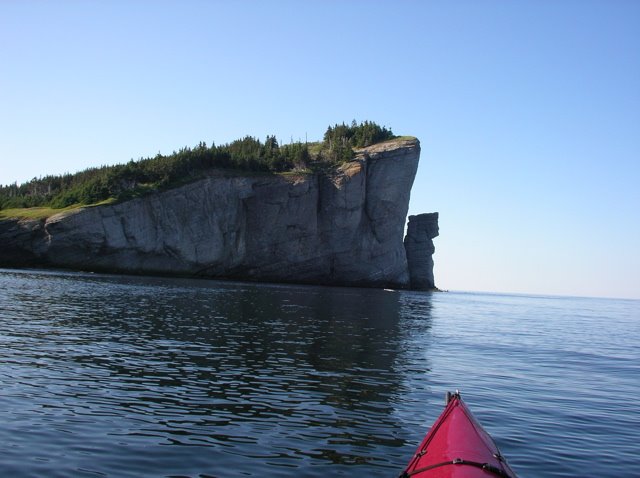
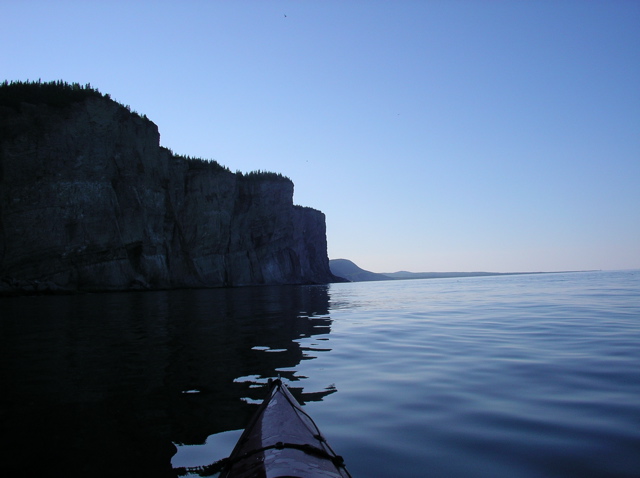
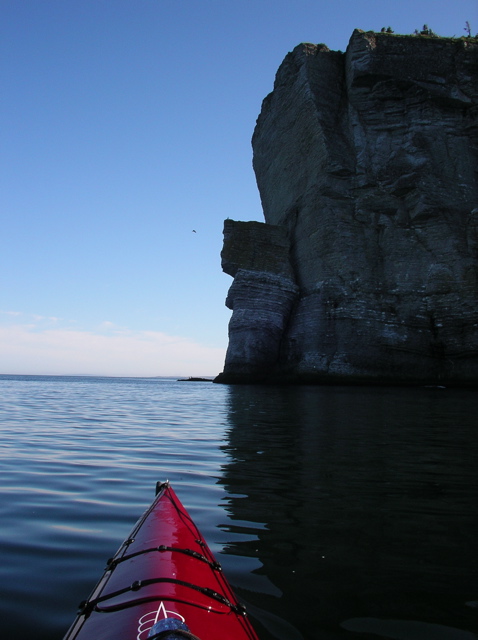
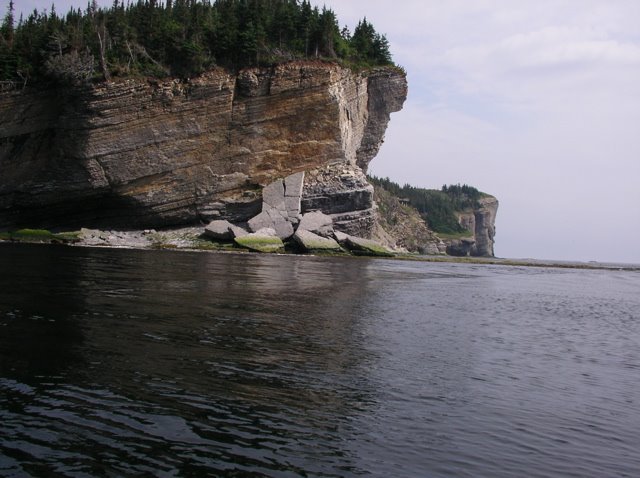
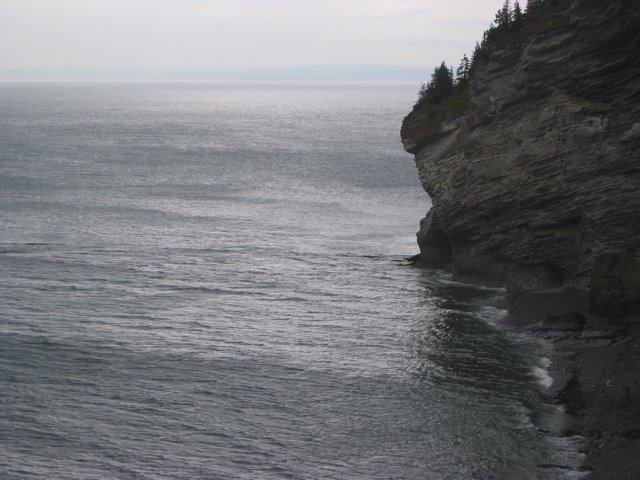
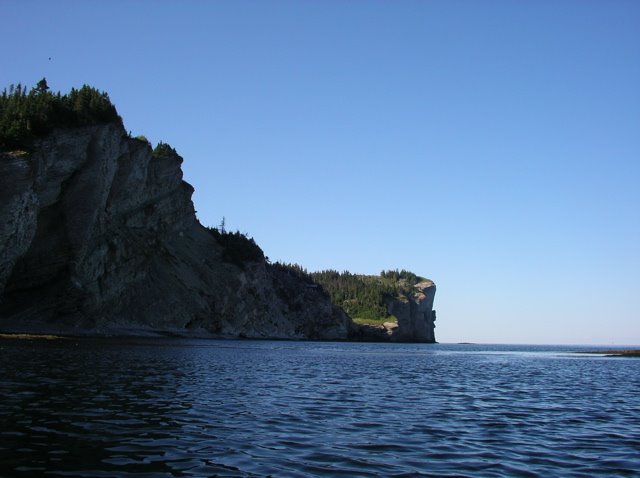
I paddled round the cape and headed down the north side. The smooth shearness of the cliffs was so awesome a sight, especially when I was able to paddle right up to their immense walls and then reach out and touch them.


The seals made the most interesting howling sounds, which at first I took to be some freak of the sea blowing in a cave or something. Very eerie, like sea-wolves, but not quite!


I didn't want to head back. I wanted to paddle on forever, but after about an hour exploring, I turned and made my way back around the point to the southern coast and headed towards the car, about 10 kilometers away.


I noticed jellyfish pulsing along with me, heading who knows where. A whale surfaced about a 100 yards off my bow, but finding me, chose to leave me as mysteriously. What is it about whales? Why do we envy them?


I was back at the car about 7 pm and began thinking about what to cook for diner. What about fettuccine with shrimp and a little white wine? Sounded good to me!
Tomorrow, I head to Percé Rock and Bonaventure Island two bays to the south of me.

Thursday, June 29, 2006

Tripping the Gaspe - Part 3


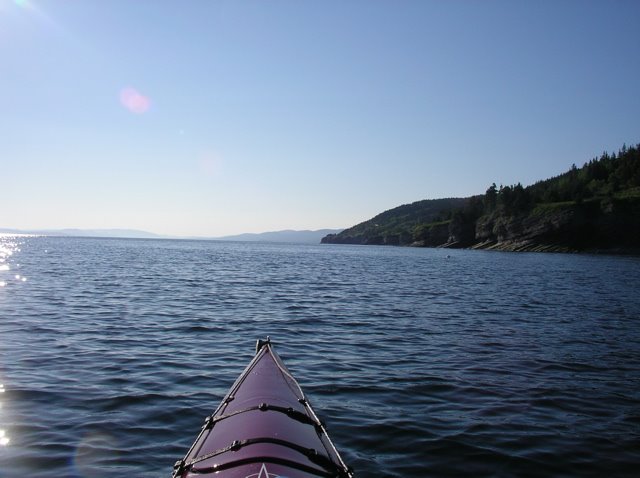
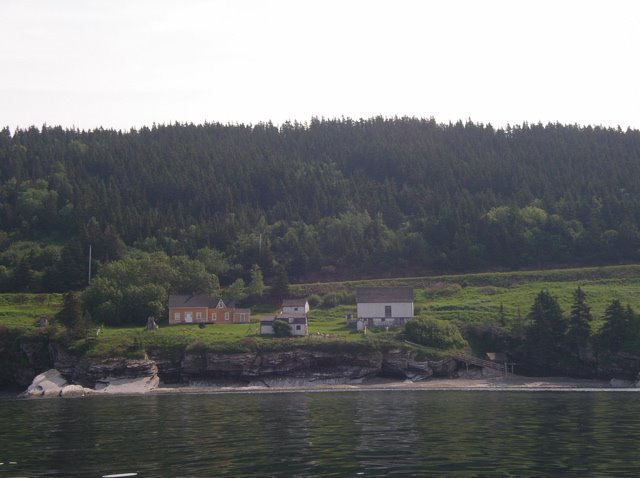
Returning to my new put-in venue ready to paddle at last, I quickly changed and launched. The whole peninsula is part of the park and was originally settled by people coming over from the Jersey Islands. They established fishing operations off the few beaches and tiny farms on the meager amounts of arable land above the nearly continuous cliffs. Today a road run behind the farms, but it didn't in the old days. The isolation was complete except for a few tracks through the hills to neighbours and of course the open sea.
The weather was partly overcast with a moderate headwind as I made my way eastwards along the shore. I was constantly intrigued by the layered geology of the shore. The layers dipped into the water and here and there opened up little coves, caves and cracks for birds to nest in. The weather was very unsettled. Winds kept gusting down off the steep land on my left and would try pushing me out to sea.


Eventually, the farm buildings gave way to more rugged, forested areas and the cliffs rose higher and higher. I began to feel the ocean swell rolling towards me. Out to my right, I could hear the breathing of whales and finally could see their backs rolling as they paralleled my progress towards the point. Too far away for me to identify, it was fun to know they were out there keeping an eye out for me.
Suddenly, I realised I was at the tip! It was announced by a blast of air coming around the last huge cliff which pushed itself high out of the water above me. The wind blown waves coming perpendicular to the swell became quite unsettling making me wonder how wise I was to continue much further. I turned towards the cliff nearest me and found some shelter just off its base where I had only the swell to deal with. From here, I could see the waves flinging themselves on the weed covered shoals off the tip. It was a powerful moment as the sea put on a show for me. I had the best seat - the only seat - in the house! Seals began appearing here and there. I was amazed at their daring, darting into the white foam over and over again seemingly invincible.


Again I considered trying to 'round the cape' like a good adventurer should, but the more I watched the conditions, I knew it was pushing my abilities over the edge. Reluctantly I headed back to the put-in with the idea that I could try again another day.


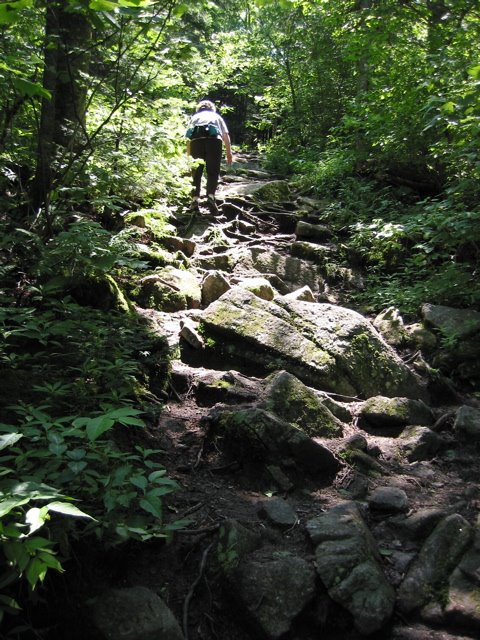
Once I'd dried off and changed, I couldn't help myself. I had to go out again and see the wind and the waves. This time, I chose to take the hiking trail out. Part way there, it began to rain and as I got higher the wind became more and more of a factor. I was glad to have got off the water when I did.


At the trail's end, I came to an opening to find a lighthouse! I'd never noticed it from the water, probably because I was too close to the cliffs to see it. A good sized sailing ketch was coming round the cape under reefed sails. What a fun time they were having!
Huddled together in the only sheltered spot at the cape was a mixture of nationalities, France, England and Austria were all represented. None had comfy rain gear like I was wearing. They must have had a chilly walk back to the parking area several kilometers away!


I went part way down the cliff face to a lookout to see the area I had just been paddling in. Again I watched the seals playing in the waves and was impressed by the crashing waves as they blasted over the shoal waters just beyond the cape. I could see the sheltered water I had stayed in while trying to decide if I was up to venturing into the fray. I'm glad I stayed put!
Tomorrow, I round the cape under quite different conditions!